

28&29 October
AI Beyond the Hype - Supported by CroAI
Kraš Auditorium, Zagreb
GET TICKETS
Darko Špoljarić
VP of AI at Notch
An engineer that's been developing and architecting enterprise systems since 2007, leading teams since 2011, passionate about agile, stepped into an AI engineering and subsequently leadership role in 2025.
Always trying to find the optimal solution technically and keep it grounded in real business needs. Never introducing unnecessary fat into the system, even now - when it's super easy to do so. Since forever a fan of automated testing on all levels, and since agents came a fan of evals of all shapes and forms.
Father of two, husband, runner, mountain biker.

Ivan Prlić
Senior Solutions Architect at Sedmi Odjel
Ivan Prlić is a Senior Solutions Architect at Sedmi Odjel, an AWS Premier Consulting Partner based in Zagreb. He has spent more than twenty years building software and cloud platforms, the last decade as an architect and consultant on AWS for customers in the public sector, finance and healthcare. His recent work centres on generative AI on Amazon Bedrock for customers in regulated industries; the private, auditable AI platform in this talk is one he designed and delivered in 2026. He also teaches AWS courses as an authorised instructor.

Filip Pavičić
Machine Learning Engineer at Atomic Intelligence
Filip has more than four years of experience in the research, development, and deployment of AI based computer vision solutions. He is currently a Machine Learning Engineer at Atomic Intelligence, where he works on a layout detection project that extracts structured information from complex, scanned, and photographed documents, making them usable as data sources for AI driven solutions. Previously, he worked on automotive safety systems, building perception models that detect and track pedestrians and other vulnerable road users in real time.

Senko Rašić
Partner at VibeScale
Senko Rašić is a software engineer and serial entrepreneur from Zagreb with 25+ years of experience building and scaling software companies. He co-founded several startups (a few of which were acquired) and went through Y Combinator. Today he is a partner at VibeScale, an AI advisory firm, where he helps engineering teams adopt AI in software development and build AI into their products.

Tomislav Vazdar
Founder and CEO at Riskoria Advising & Professional Services
Tomislav Vazdar is the Founder and CEO of Riskoria Advising & Professional Services, an advisory firm working in cybersecurity, risk management and regulatory compliance. His career spans international roles in corporate IT leadership and risk management advisory, followed by more than a decade leading corporate security at one of Croatia's largest banks.
He advises essential and important entities on implementing the Croatian Cybersecurity Act and the NIS2 Directive, with a focus on risk management and the resilience of the systems that health, finance, energy, supply and other essential services depend on. He also works on AI governance and the threats posed by autonomous AI systems.
He serves as Programme Lead for the MSc Enterprise Cybersecurity at OPIT - Open Institute of Technology and as a Board Member of the Croatian Artificial Intelligence Association (CroAI). As a member of the NKS community, he is an active stakeholder in Croatia's cybersecurity ecosystem. He holds a degree in finance from the Faculty of Economics and Business, University of Zagreb, where he is completing his doctoral studies in Economics and Global Security.

Marko Gulan
CEO at Astera Advisory
Marko Gulan is CEO of Astera Advisory and an advisor to boards on cybersecurity, risk management and corporate governance. With more than 15 years in the ICT sector, his career began at Microsoft, continued in the telecommunications industry, and led him to Schneider Electric, where he advised on critical infrastructure and OT/ICS security across South-East Europe. Today, as an externalized CISO, he guides organizations across critical infrastructure, financial services and industry through compliance with the NIS2 Directive, DORA, the Cyber Resilience Act (CRA) and ISO/IEC 27001, and is a certified ISO/IEC 27001:2022 Lead Auditor.
His current work centres on risk and compliance management in the adoption of artificial intelligence, and on what happens when organizations deploy AI faster than they define accountability for it. He is a regular speaker at domestic and regional conferences and a columnist for leading business and technology publications. He also shares his experience with students as a lecturer in professional cybersecurity courses, with a growing focus on the risks introduced by AI.

Bojan Ždrnja
CTO at Infigo IS
Bojan Ždrnja is the CTO of Infigo IS (part of the Allurity Group) and a cybersecurity expert with extensive experience in penetration testing, red teaming and security service development. As a SANS Principal Instructor and co-author of the SEC542 course, he trains cybersecurity professionals and explores emerging technologies and attack techniques. In recent years, his work has focused on the use of artificial intelligence in offensive security and how AI is reshaping the speed, scalability and sophistication of modern cyberattacks.

Marko Martinović
Partner and Regional Director at Margins Agency
Marko Martinović is Partner and Regional Director at Margins, a Zagreb-based company that has delivered complex software and AI solutions for mid-size and large companies, mainly in the United States and Australia, for more than eight years. In 2025, Deloitte recognised Margins as the fastest-growing tech company in Croatia and the 11th fastest-growing tech company in Central Europe. Based on this experience, Margins built Rivermind, an AI platform for enterprise operations. Marko leads Rivermind's work with enterprise clients in Croatia and the wider region, where the team implements AI systems in production across distribution, manufacturing, retail, financial services and other industries.
Check out the Schedule
PANEL | To Pace or Not to Pace the Frontier: Hamlet Meets AGI
Tuesday 27 October, Ilica 16 (prvi kat) — hosted by Sedmi odjel, supported by CroAI Legal Club
Opening remarks: Ivan Ivanković (Founder & CEO at Tendify)
Moderator: Stefan Martinić (Attorney at Law, LL.M. Harvard Law School)
Panelists:
Andrea Čović Vidović (Deputy Head of the European Commission Representation in Croatia),
Karlo Knežević (PhD · Sofascore),
Lovro Nobilo (Verne),
Ivana Greguric (PhD · Associate Professor at the Faculty of Croatian Studies, University of Zagreb)

Stefan Martinić
Attorney at Law, LL.M. Harvard Law School
Stefan Martinić is an attorney with years of experience in leading Zagreb law firms, specializing in corporate law, European Union law, and technology law (including GDPR, artificial intelligence, intellectual property, etc.). He has held all positions—from trainee to partner—before establishing his own law office.
He gained his education and experience at some of the world’s leading institutions: he earned an LL.M. from the London School of Economics (EU Law & Tech Law) and Harvard Law School (Cyberlaw), participated in an exchange program at Université Paris Panthéon-Sorbonne, obtained the CIPP/E certification and an AI certification from Saïd Business School (Oxford), and completed internships at the Court of Justice of the EU and the European Parliament.
He is a member of the working group of the Ministry of Justice, Public Administration and Digital Transformation of the Republic of Croatia for drafting the national law implementing the AI Act.
Conference Opening
AI2Future 2026 Programme Committee; CroAI Board Member
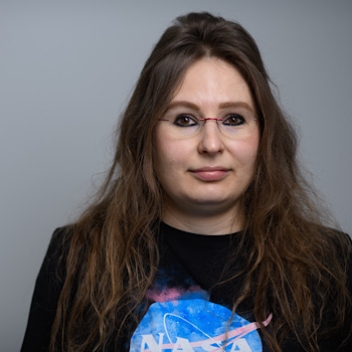
Valentina Zadrija
Director of AI at Gideon
Valentina is the Director of AI at Gideon, where she develops AI models for robotics and physical AI. She has over 20 years of experience in the field, working at the intersection of LLMs, computer vision, and 3D understanding models. Valentina obtained her PhD in AI from the University of Zagreb in 2017, focusing on weakly supervised learning and traffic safety. After completing her PhD, she joined Rimac Automobili to work on scene-understanding models, and later moved to Gideon to contribute to autonomous mobile robotics. She spent the last few years at Yaak AI GmbH, where she trained VLA models and contributed to the HuggingFace LeRobot platform. She has now returned to Gideon, working to make robotics in Croatia great (again). Valentina is a mother of three and serves as an ambassador for the Female Engineer of the Year initiative in Croatia.
Arsène Lavaux Santonacci (SilenceSilence.ai)
Human art, robotic science, and the agents that only work when both are in the system

Arsène Lavaux Santonacci
Founder & CEO at SilenceSilence.ai
Arsène Lavaux Santonacci is the founder and CEO of SilenceSilence.ai, where he is building a Clinical Human Voice Restoration OS to help people who lose their voice preserve and restore what makes it uniquely their own.
The project began with a promise to his childhood friend Richard, who lost his voice to ALS. That personal commitment grew into a broader mission to make personalized voice restoration accessible to people affected by conditions that impair speech. Clinical studies are underway in Europe, with plans to expand to the United States.
Since 2023, Arsène has also deployed agentic AI solutions in healthcare and enterprise environments.In the United States, he worked with the Purchaser Business Group on Health (PBGH), developing next-generation healthcare services for members representing major global employers.
Alongside his work in health AI, Arsène has advised founders across the US, Europe, Asia and Africa, including entrepreneurs from Y Combinator, Techstars and 500 Global. He is a growth mentor for 500 Global and HEC startups and co-founded the French chapter of the Agentics Foundation.
From Demo to Deployed: What Actually Gets AI Into Production

Abhishek Bhargava
Co-founder at Datum
Abhishek Bhargava is the co-founder of Datum, an AI software and services company building a suite of AI products and delivering custom AI solutions for enterprise clients across industries. At Datum, he leads the work of translating frontier AI capabilities into production systems — spanning agentic workflows, voice agents, and domain-specific applications — and partners directly with clients to architect, deploy, and scale these solutions in real operational environments.
Before Datum, Abhishek founded Vectordash (Y Combinator W19), where he built low-latency GPU streaming technology that put real-time computer vision workloads in the cloud — a thread that runs through much of his career. He's shipped production ML and computer vision systems as an engineer at a robotics startup, conducted deep learning research at MITRE, and built quantitative trading infrastructure at a commodities hedge fund. He later launched his own crypto hedge fund, deploying strategies that outperformed the market. His published research spans bioinformatics (using data science to design HIV-inhibiting peptides), NLP (duplicate question detection with word2vec and CNNs), and reinforcement learning applied to equity markets using probabilistic guarantees from cyber-physical systems — a strategy that significantly outperformed the S&P 500 over a 15-year backtest.
Abhishek studied Computer Science, Computational Finance, and Robotics at Carnegie Mellon. At Datum, he focuses on turning deep technical expertise into AI implementations and partnerships that move the needle for clients.
Your Evals Are Tests. Now What? AI made everyone a tester. The craft already exists.

Irja Straus
Team Lead Testing Electronic Components at Jungheinrich
Irja Straus leads testing for embedded software and electronic components at Jungheinrich Croatia, and is the founder of a consulting company specializing in quality engineering and testing. She began her career as a software tester and business analyst, later moving into a product manager role. After several years in product, she took on the challenge of establishing testing practices and embedding quality from the earliest stages of development. For the past few years, she has focused on contemporary exploratory testing, building quality engineering strategy and effective cross-team collaboration.
COFFEE BREAK
Desislava Sarbinovska (Service Design Digital) & Luka Baranović (Humanact)
AI Doesn’t Fail. Services Do - From AI Use Cases to AI-Native Services and Sustainable Business Value

Desislava Sarbinovska
Co-founder at Service Design Digital
Desislava Sarbinovska is the co-founder of Service Design Digital, an international agency specializing in service design, digital transformation, and responsible AI. She works with global organizations to redesign services, transform business models, and turn emerging technologies into meaningful business and social impact.
With 15 years of experience in the IT industry and a strong background in financial services, education, and digital innovation, Desislava combines strategic leadership with deep design expertise. She holds an Executive MBA from IEDC-Bled School of Management (Slovenia) and a specialization in Service Design for Innovation from IED Design School (Barcelona).
From Training to Inference: Redesigning the Data Center for the AI Era
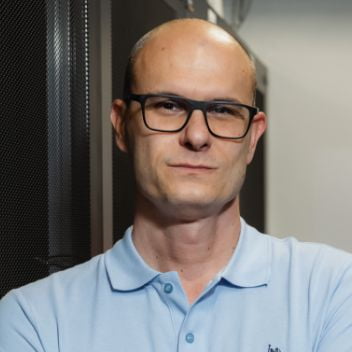
Bojan Klasan
Head of ICT Delivery and Data Center Services at A1 Croatia
Bojan Klasan is the Head of ICT Delivery and Data Center Services at A1 Croatia, driving strategic planning, infrastructure design, governance, and end-to-end technical execution across data centers, cloud environments, and complex enterprise ICT solutions.
With over 20 years of industry experience, he specializes in bridging technical infrastructure with business strategy. His leadership encompasses full-lifecycle data center projects—from initial design and budgeting to deployment and optimization—alongside the seamless delivery of high-availability ICT services, cloud integration, and enterprise-grade architecture.
PANEL by CroAI
Your AI agent has access to everything. What could go wrong?
Moderator: Tomislav Vazdar (Riskoria Advising & Professional Services)
Panelists:
Marko Gulan (Astera Advisory),
Bojan Ždrnja (Infigo IS)
Tomislav Vazdar
Founder and CEO at Riskoria Advising & Professional Services
Tomislav Vazdar is the Founder and CEO of Riskoria Advising & Professional Services, an advisory firm working in cybersecurity, risk management and regulatory compliance. His career spans international roles in corporate IT leadership and risk management advisory, followed by more than a decade leading corporate security at one of Croatia's largest banks.
He advises essential and important entities on implementing the Croatian Cybersecurity Act and the NIS2 Directive, with a focus on risk management and the resilience of the systems that health, finance, energy, supply and other essential services depend on. He also works on AI governance and the threats posed by autonomous AI systems.
He serves as Programme Lead for the MSc Enterprise Cybersecurity at OPIT - Open Institute of Technology and as a Board Member of the Croatian Artificial Intelligence Association (CroAI). As a member of the NKS community, he is an active stakeholder in Croatia's cybersecurity ecosystem. He holds a degree in finance from the Faculty of Economics and Business, University of Zagreb, where he is completing his doctoral studies in Economics and Global Security.
Marko Gulan
CEO at Astera Advisory
Marko Gulan is CEO of Astera Advisory and an advisor to boards on cybersecurity, risk management and corporate governance. With more than 15 years in the ICT sector, his career began at Microsoft, continued in the telecommunications industry, and led him to Schneider Electric, where he advised on critical infrastructure and OT/ICS security across South-East Europe. Today, as an externalized CISO, he guides organizations across critical infrastructure, financial services and industry through compliance with the NIS2 Directive, DORA, the Cyber Resilience Act (CRA) and ISO/IEC 27001, and is a certified ISO/IEC 27001:2022 Lead Auditor.
His current work centres on risk and compliance management in the adoption of artificial intelligence, and on what happens when organizations deploy AI faster than they define accountability for it. He is a regular speaker at domestic and regional conferences and a columnist for leading business and technology publications. He also shares his experience with students as a lecturer in professional cybersecurity courses, with a growing focus on the risks introduced by AI.
Bojan Ždrnja
CTO at Infigo IS
Bojan Ždrnja is the CTO of Infigo IS (part of the Allurity Group) and a cybersecurity expert with extensive experience in penetration testing, red teaming and security service development. As a SANS Principal Instructor and co-author of the SEC542 course, he trains cybersecurity professionals and explores emerging technologies and attack techniques. In recent years, his work has focused on the use of artificial intelligence in offensive security and how AI is reshaping the speed, scalability and sophistication of modern cyberattacks.
LUNCH
Stefan Martinić (Attorney at Law) & Kristijan Galić (Lawyer at Galić i Martinković)
Croatia Made (Certain Uses of) AI a Crime. Are You Next?
Stefan Martinić
Attorney at Law, LL.M. Harvard Law School
Stefan Martinić is an attorney with years of experience in leading Zagreb law firms, specializing in corporate law, European Union law, and technology law (including GDPR, artificial intelligence, intellectual property, etc.). He has held all positions—from trainee to partner—before establishing his own law office.
He gained his education and experience at some of the world’s leading institutions: he earned an LL.M. from the London School of Economics (EU Law & Tech Law) and Harvard Law School (Cyberlaw), participated in an exchange program at Université Paris Panthéon-Sorbonne, obtained the CIPP/E certification and an AI certification from Saïd Business School (Oxford), and completed internships at the Court of Justice of the EU and the European Parliament.
He is a member of the working group of the Ministry of Justice, Public Administration and Digital Transformation of the Republic of Croatia for drafting the national law implementing the AI Act.

Kristijan Galić
Lawyer at Galić i Martinković j.t.d.
Attorney at law Kristijan Galić finished his law studies at the University of Zagreb in 2017, after which he has been employed as a trainee lawyer, acquiring extensive experience across almost all legal branches, excelling particularly in the criminal law, constitutional law and civil law.
In 2021, he passes the bar exam before the Ministry of Justice and Administration of the Republic of Croatia, after which has been registered as the Attorney at law in the Croatian Bar Association. In 2022, he passes the bankruptcy trustee exam before the Ministry of Justice and Administration of the Republic of Croatia and obtains a certificate for the public procurement specialist before the Ministry of Economy and Sustainable Development of the Republic of Croatia.
In 2023, together with Attorney at law Marko Martinković, he is founding the law firm Galić i Martinković j.t.d., continuing to provide comprehensive legal services to both domestic and foreign clients.
Press 1 for AI

Vedran Jelić
Digital and AI Specialist in Customer Service at A1 Hrvatska
Vedran Jelić is a Digital and AI Specialist in Customer Service at A1 Hrvatska. An educator by training, he earned his master's degree in education (mag. educ.) from the Faculty of Croatian Studies, University of Zagreb, in 2021. and started his career at A1 in 2022, in customer service. Today he works on bringing digital and AI solutions to both customers and frontline teams. An AI enthusiast at heart, Vedran loves running trainings and helping people learn, cares deeply about customers, and is excited by everything AI makes possible.
Marko Martinović (Margins Agency)
From Pilot to Production: Building an AI System for Field Sales Teams
Marko Martinović
Partner and Regional Director at Margins Agency
Marko Martinović is Partner and Regional Director at Margins, a Zagreb-based company that has delivered complex software and AI solutions for mid-size and large companies, mainly in the United States and Australia, for more than eight years. In 2025, Deloitte recognised Margins as the fastest-growing tech company in Croatia and the 11th fastest-growing tech company in Central Europe. Based on this experience, Margins built Rivermind, an AI platform for enterprise operations. Marko leads Rivermind's work with enterprise clients in Croatia and the wider region, where the team implements AI systems in production across distribution, manufacturing, retail, financial services and other industries.
Luka Kladarić
The Agent Has No Arms and Legs
Gordan Kreković & Hrvoje Šamija (Visage Technologies)
Seeing is Not Enough: Interactive Reasoning for Vision-Language Models

Gordan Kreković
CEO at Visage Technologies
Gordan Kreković is the CEO of Visage Technologies, a company providing R&D services and products based on edge AI and computer vision. With a PhD in Computing and a diverse career managing tech products, teams, and companies, Gordan has broad experience spanning research, engineering, and management. Alongside his main career, he has authored and co-authored numerous scientific publications, served as an Assistant Professor at the Academy of Music, remained active in the FER alumni community by serving as president of AMAC-Alumni FER, and continued his engagement in music and composition.

Hrvoje Šamija
CBDO at Visage Technologies
Hrvoje Šamija is a technology executive and engineer who serves as the Chief Business Development Officer (CBDO) at Visage Technologies, a company specializing in computer vision, artificial intelligence, and machine learning solutions. Alongside his team, Hrvoje focuses on bridging the gap between deep-tech research and market-ready industrial applications, driving the commercialization and development of advanced solutions spanning robotics, automated driving, and edge AI. He holds a Master’s degree from the Faculty of Electrical Engineering and Computing (FER) at the University of Zagreb, as well as an MBA from COTRUGLI Business School. Prior to his current position, Hrvoje built a strong foundation in software and hardware development, serving in various engineering and leadership roles.
Michael Gern (TD SYNNEX)
Field Solutions Architect, Data & Analytics
Your AI Agents Need a World Model Using Ontology for Context, Tool Safety and Persistent State

Juraj Pejnović
Senior software engineer at EPAM
Juraj is a senior software engineer in EPAM with more than five years of experience building large-scale web applications, primarily with React and TypeScript. Alongside engineering, he is interested in AI-assisted development, agentic workflows, software architecture, and the way new tools change how engineering teams organize their work. He also runs his own e-commerce business and is currently pursuing an MBA at ZŠEM in Zagreb.
LUNCH
Mario Haberle (Delta Reality)
Listening, Composing, Notating: Lessons from Building AI for Music

Ivan Vican
Staff Machine Learning Engineer at Muse Group
Ivan Vican is a Staff Machine Learning Engineer at Muse Group, the company behind MuseScore, Audacity and Ultimate Guitar, where he develops advanced audio models for millions of musicians, most recently an audio-to-score system now in production in MuseScore. Before that he spent three years at Aiva Technologies, one of the earliest companies working on generative music, where he developed a best-in-class neural audio codec that became the foundation of their music generation models. Over the course of his career he has consulted for Fortune 500 companies, led AI teams, and developed dozens of deployed machine learning and signal processing solutions across music, healthcare, agriculture and consumer electronics. Ivan holds a PhD in audio machine learning, is a co-inventor on six patents in audio technology, and has authored scientific publications on audio, acoustics and biomedical signal processing.
The Prompt Works. Now What?

Mihael Španović
Lead Engineer at S.A.G.E.
Mihael Španović is Lead Engineer at S.A.G.E., a public benefit company building an AI-native agricultural intelligence platform spanning soil and crop modeling, carbon intensity scoring, and insurance products for US agriculture. He previously worked as Head of Engineering at Protostar Labs, leading a 10-person team across BioTech, industrial vision, and space sector projects. Mihael holds an M.Sc. in AI from Johannes Kepler Universität Linz and conducted robotics research at the University of New Mexico. Outside of work: motorcycles, airsoft, board games, and hardware tinkering.
Stevica Kuharski (Fil Rouge Capital)
Agentic AI in the Real World: Are we there yet?
Classification without fine-tuning: comparing Jev, BERT and an LLM
Senko Rašić
Partner at VibeScale
Senko Rašić is a software engineer and serial entrepreneur from Zagreb with 25+ years of experience building and scaling software companies. He co-founded several startups (a few of which were acquired) and went through Y Combinator. Today he is a partner at VibeScale, an AI advisory firm, where he helps engineering teams adopt AI in software development and build AI into their products.
LUNCH
Filip Pavičić (Atomic Intelligence)
Can We Rely on Extracted Documents? Parsing Methods Compared
Filip Pavičić
Machine Learning Engineer at Atomic Intelligence
Filip has more than four years of experience in the research, development, and deployment of AI based computer vision solutions. He is currently a Machine Learning Engineer at Atomic Intelligence, where he works on a layout detection project that extracts structured information from complex, scanned, and photographed documents, making them usable as data sources for AI driven solutions. Previously, he worked on automotive safety systems, building perception models that detect and track pedestrians and other vulnerable road users in real time.
Rinaldo Ugrina (Baymard Institute)
How AI Designs the The New Logic of Work

Rinaldo Ugrina
Head of Product at Baymard Institute
Rinaldo Ugrina is Head of Product at Baymard Institute, a UX research firm whose research is used by 71% of all Fortune 500 e-commerce companies. He has run over 200 high-stakes sessions with product and design teams at companies such as Google, Amazon, Meta, Stripe and Nike, which gives him an unusually direct view of how large organizations actually make decisions. He is a keynote speaker on how ideas move inside organizations, securing organizational buy-in and on where value goes when AI makes execution cheap.
Your employees use AI. Do you have any control?
Ivan Prlić
Senior Solutions Architect at Sedmi Odjel
Ivan Prlić is a Senior Solutions Architect at Sedmi Odjel, an AWS Premier Consulting Partner based in Zagreb. He has spent more than twenty years building software and cloud platforms, the last decade as an architect and consultant on AWS for customers in the public sector, finance and healthcare. His recent work centres on generative AI on Amazon Bedrock for customers in regulated industries; the private, auditable AI platform in this talk is one he designed and delivered in 2026. He also teaches AWS courses as an authorised instructor.
COFFEE BREAK
Chris Thomas (LSE Data Science Institute)
AI’s impacts on the quality of jobs

Chris Thomas
Policy Fellow at the LSE Data Science Institute
Chris Thomas is a Policy Fellow in the LSE Data Science Institute. His work focuses on the development of AI governance mechanisms and regulatory policy to support ethical AI and the management of AI-driven societal transformation.
At LSE, Chris leads on work supported by the Foreign Commonwealth and Development Office advising policymakers around the world on AI regulatory strategy and capability development. Chris also plays a central role in delivering the LSE Global Forum on AI and the Social Sciences and producing its accompanying State of AI and Society report.
Before joining LSE, Chris was a Senior Research Associate at The Alan Turing Institute where he led a project on regulatory readiness for AI and advised UK regulators on emerging policy challenges. He also led research for the AI Standards Hub, examining the role of standards in the governance of foundation models.
Alongside his role at the Turing, Chris served as a Senior Policy Advisor to the UK Department for Science, Innovation and Technology, via the Government’s Expert Exchange Programme. Chris was the lead author of the AI Regulatory Capability Framework and Self‑Assessment Tool, co-developed with UK regulators and government departments.
Chris co‑authored the AI Assurance Roadmap at the Centre for Data Ethics and Innovation and has contributed to the UK Government’s AI Strategy (2021) and AI Policy Paper (2022). He has represented the UK as an expert in the Council of Europe’s CAHAI Policy Development Group, contributing to the Human Rights, Democracy and Rule of Law Impact Assessment for AI.
Previous positions include at the Oxford Internet Institute, where Chris co-authored a methodology for interpreting and applying ethical AI principles in high‑risk settings, and at the Ada Lovelace Institute, where he researched the ethical and societal implications of health data use outside of clinical settings.
From Chat to Platform: Building a Multi-Agent AI Workspace for Enterprise Knowledge

Toma Petrač
Machine Learning Specialist at Span
Toma Petrač is a Machine Learning Specialist with experience designing production-oriented AI, machine learning, and document intelligence solutions. He is currently focused on building a custom multi-agent copilot platform that combines retrieval-augmented generation, analytics, document reasoning, tool orchestration, and enterprise Azure services.
His work spans agentic architectures, prompt and context engineering, NLP, MLOps, and backend development, with a particular interest in making complex AI systems reliable, scalable, and practical for enterprise use. He also explores document intelligence and hybrid or on-prem deployment approaches for AI-powered knowledge systems.
Humanoids Beyond the Demo Reel: Teaching a Robot a Real Industrial Task
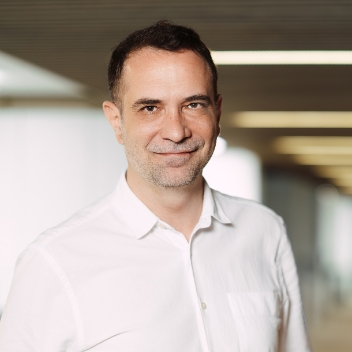
Nenad Mandić
Head of AI at Abysalto
Nenad is Head of AI at Abysalto, responsible for shaping and executing AI solutions and physical AI (robotics) strategy while building the capabilities for effective adoption of AI innovation in business.
With more than 20 years of experience in banking, payment systems and digital transformation, he has a proven track record in delivering solutions where reliability, execution and business value are critical.
His current focus is on developing AI solutions including LLMs, NLP, RAG, agentic systems, automation, and robotics, with strong emphasis on bringing AI solutions into real-world applications.
LUNCH
The Year of Not Building
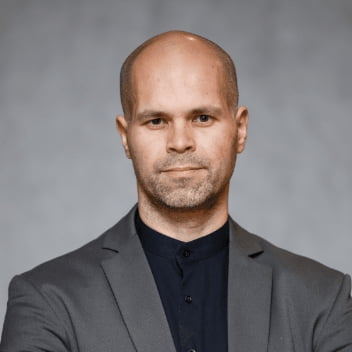
Hani Zahirović
CTO at Bloomteq
While having encountered a variety of technologies throughout his professional career, when asked to describe himself, Hani likes to state that he considers himself a problem solver. Hani has been working withsoftware development teams in various capacities for over 10 years, assisting them in planning, writing, and testing code, as well as organizing processes, nurturing team growth, educating team members, and much more. As a natural progression, Hani has played a key role in organizing the company's tech department as the CTO, establishing a roadmap for the technical direction we aim to pursue in the upcoming period.
Antonella Barišić Kulaš (Odonata Technologies)
From Robotics Research to the Warehouse Racks

Antonella Barišić Kulaš
Co-founder and CEO of Odonata Technologies
Antonella Barišić Kulaš, PhD, is a co-founder and CEO of Odonata Technologies, an inventory intelligence company transforming warehouse operations. Odonata provides real time visual proof of physical stock, identifying missing, misplaced, or unrecorded items against WMS records so logistics teams make decisions based on audit ready evidence.
With a research background in robotics and computer vision, Antonella spent over six years developing AI systems for autonomous robots before founding Odonata. She holds a summa cum laude PhD from UNIZG-FER, has led NATO and EU research projects, is a L'Oréal-UNESCO For Women in Science laureate, and was part of the team that won the MBZIRC 2024 international robotics challenge.
Imran Nino Eškić (Hyperbunker)

Imran Nino Eškić
Co-founder of HyperBUNKER
Imran Nino Eškić is an innovator, co-founder of HyperBUNKER, and an expert with nearly 30 years of hands-on experience in data recovery and security. He is the founder of InfoLAB, the first data recovery laboratory in this part of the EU, with more than 50,000 data recovery cases handled when all seemed lost.
However, with the rise of AI technologies, sophisticated ransomware, and cyberattacks, technical data recovery is not always possible.
To ensure business continuity in the event of any attack, he invented HYPERBUNKER – a patented offline vault that is inaccessible to hackers and ransomware attacks. He holds a U.S. patent (US12608142B1) that sets new standards in cyber resilience. Today, he combines AI solutions with hardware-level security, focusing on the protection of critical infrastructure and shaping a secure technological future.
AI code will be regenerated, not maintained

Dušan Omerčević
CEO and founder of *codeplain
Dušan Omerčević is CEO and founder of *codeplain, an AI-powered code generation platform that turns production-ready software from specifications written in ***plain language. Previously, Dušan founded Cleanshelf, a SaaS management platform, which was acquired by SAP LeanIX in 2021. He holds an M.Sc. in Computer Vision from the University of Ljubljana.
Evaluation of a (very) complex agent - lessons learned
Darko Špoljarić
VP of AI at Notch
An engineer that's been developing and architecting enterprise systems since 2007, leading teams since 2011, passionate about agile, stepped into an AI engineering and subsequently leadership role in 2025.
Always trying to find the optimal solution technically and keep it grounded in real business needs. Never introducing unnecessary fat into the system, even now - when it's super easy to do so. Since forever a fan of automated testing on all levels, and since agents came a fan of evals of all shapes and forms.
Father of two, husband, runner, mountain biker.
Neuromorphic Computing and the new wave of AI
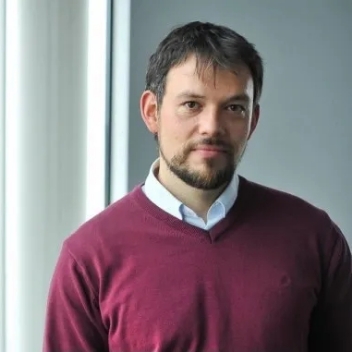
Marko Velić
Staff Software Engineer at Google
Marko is a Staff Software Engineer at Google where he work on Gemini model improvements for multimodal and educational usecases. Previously he worked at Photomath, Meta (Facebook), Styria, LEGO (as consultant), University of Zagreb and has entrepreneurship experience. He won many awards including the ones from Microsoft and NVIDIA. Marko holds PhD and MBA degrees. Marko is also a lecturer at Algebra University. He is interested in ML research and practical applications in real life scenarios.
COFFEE BREAK
We didn’t solve knowledge maintenance. We deleted the problem.

Nedim Muhamedagić
Chief Architect Officer at Bloomteq
With over a decade of software development experience, Nedim has taken on the Chief Architect Officer role at Bloomteq. He excels in navigating complex challenges with rapid problem-solving skills. Renowned for simplifying complexities, Nedim leads by example with a dedication to excellence. His specialty is optimizing dev team delivery at scale, ensuring streamlined processes and efficient outcomes.
From Prediction to Explanation: Building Creative Intelligence

Ivan Nikolov
Machine Learning Engineer at Celtra
Ivan Nikolov is a Machine Learning Engineer working in Celtra. At Celtra, he has worked on the Creative Intelligence solution, focusing on operationalizing ML systems, Bayesian modeling, and AI engineering with frontier foundation models. His work spans unstructured image and video understanding, as well as transparent and explainable ML decision-making.
Zlatan Ajanović (Technikum Wien)
Intelligent assistive robots: are we there yet?

Zlatan Ajanović
Senior Lecturer and Researcher at Technikum Wien
Dr. Zlatan Ajanović is a Senior Lecturer and Researcher at Technikum Wien and the founder of a stealth startup. Previously, he was a postdoctoral researcher at the Chair for Machine Learning and Reasoning at RWTH Aachen University with Prof. Hector Geffner, and a postdoctoral researcher at TU Delft with Prof. Jens Kober. He earned his PhD from Graz University of Technology. His research focuses on decision-making and control for autonomous robots, drawing on planning, learning, and control theory. He is the recipient of the IFAC Young Author Award, the Hans List Award, and the DAAD AInet PostDoc Fellowship. He has co-organized several workshops and conferences, most notably the AAAI 2025 and ICAPS 2025 workshop Bridging the Gap Between AI Planning and Reinforcement Learning (PRL), the ICAPS 2025 Workshop on Planning and Robotics (PlanRob), the ICRA 2023 Workshop on Life-Long Learning with Human Help (L3H2), the 2023 BeNeLux AI Conference, and the ICAPS 2024 Conference.
LUNCH
Category Classification, Reengineered: Fusing Text, Image, and Hierarchy

Nikolina Kosanović
Senior ML Engineer at Njuškalo
Nikolina Kosanović is a Senior ML Engineer with over 5 years of experience in Machine Learning. She works on the Data Science team at Njuškalo, Croatia's leading classifieds marketplace. Classification is a recurring thread in her work: recently, she has focused on multimodal classification models and agentic systems, and she was part of the team that won second place in the AI4Health 2025 competition, working on BI-RADS categorization of mammography images. At AI2Future, she will share how she reengineered category classification by fusing text, image, and hierarchy.
Beginner-Friendly Introduction to Speculative Decoding: From Zero to Hero
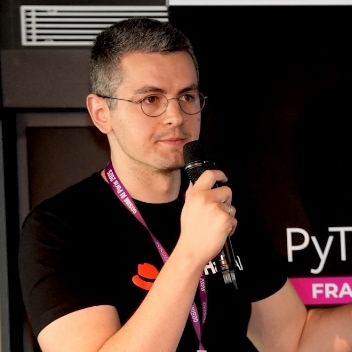
Eldar Kurtić
Principal Research Scientist at Red Hat and Institute of Science and Technology Austria (ISTA)
Eldar Kurtić is a Principal Research Scientist at Red Hat and Institute of Science and Technology Austria (ISTA), specializing in efficient inference techniques for large language models (LLMs), with a particular focus on pruning, quantization, and speculative decoding. His work centers on developing methods to accelerate inference within the vLLM engine, bridging cutting-edge research with practical deployment solutions.
The Last Human Firewall: Security in the Age of AI
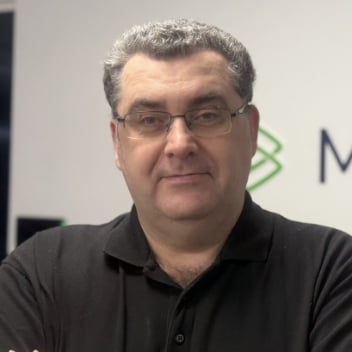
Vlatko Kosturjak
VP of Research at Marlink Cyber
Vlatko Kosturjak is VP of Research at Marlink Cyber, with over two decades of experience in information security and cybersecurity. His varied roles have given him both a comprehensive understanding of security governance and deep technical expertise.
He has discovered numerous vulnerabilities in software and hardware, ranging from widely used DNS servers such as ISC BIND and Unbound to the Linux kernel. He also holds several professional certifications, including CISSP, CISA, CISM, and OSCP.
Across many years of commercial work in the field, he has gained successful M&A experience in various areas of cybersecurity and in different roles.
AI Under Attack: Security in the Age of Intelligent Systems
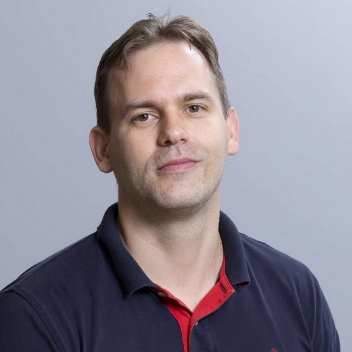
Stjepan Picek
Full professor at the University of Zagreb Faculty of Electrical Engineering and Computing
Stjepan Picek is a full professor at the University of Zagreb Faculty of Electrical Engineering and Computing, an associate professor at Radboud University, and an adjunct professor at the University of Bergen. His research spans security and cryptography, machine learning, and evolutionary computation, with particular interests in security of machine learning.
He earned a PhD (double doctorate) in computer science in 2015 from the University of Zagreb and Radboud University, and a PhD in mathematics in 2024 from the University of Paris 8. Before his current appointments, he held positions at TU Delft, MIT, and KU Leuven, alongside experience in industry and government.
Professor Picek has delivered more than 70 invited talks and published over 200 refereed papers. His work has been recognized with several awards, including the Vera Johanides Award, the Rikard Podhorsky Award, and the IEEE Croatia Section Award. He is a Senior Member of IEEE, a member of ELLIS, a Fellow of the Young Academy of Europe, and serves as an associate editor for several international journals.
Prof. dr Elmir Babović (Blum institut)
AI at the Edge: Bridging Machine Learning and Embedded Systems

Elmir Babović
Research Director at the Blum Institute
Dr. Elmir Babović is a professor at the Faculty of Information Technology (FIT) in Mostar and the Research Director at the Blum Institute, the first AI research institute in Bosnia and Herzegovina. With a strong background in applied AI, robotics, and industrial automation, he leads research initiatives that connect academic development with real-world industry applications, focusing on energy, automated systems, and practical AI implementation.
COFFEE BREAK
From Tokens to Torques: Physical AI and the Humanoid Moment

David Puljiz
Researcher and project coordinator at Neura Robotics
David Puljiz is a researcher and project coordinator at Neura Robotics, a German company building Physical AI and cognitive robots, such as the 4NE1 humanoid. His work focuses on easing the programming of and interaction with robots — spanning robotics, human-machine interaction, mixed reality, and AI — with the goal of making robots easier to deploy and genuinely useful in the real world.
A graduate of the Faculty of Electrical Engineering and Computing at the University of Zagreb, David went on to work as a research assistant at the Karlsruhe Institute of Technology (KIT), following an internship at Robert Bosch GmbH in machine vision and image processing. He obtained his PhD from KIT in 2024 for his work on using augmented reality to make industrial robots more intuitive to use. At AI2Future, he will share how AI is reshaping robotics and the way humans and robots work together.
Jelena Lončar & Filip Mirković (Atomic Intelligence)
Fake it Till You Make it: Generating (and grading) synthetic tables

Jelena Lončar
Machine Learning Research Engineer at Atomic Intelligence
Jelena Lončar has more than five years of experience in the research and development of innovative AI-based solutions. She is currently a Machine Learning Research Engineer at Atomic Intelligence, where her work on the CopyDat–Synthetic Data project focuses on novel methods for generating high-quality synthetic tabular data from sensitive and complex datasets. The project aims to enable safer data use and sharing while preserving the original data's statistical and analytical value. Previously, she worked as a consultant on ADAS systems, developing and optimizing production Computer Vision algorithms for the real-time detection and tracking of vulnerable road users.

Filip Mirković
Machine Learning Research Engineer at Atomic Intelligence
Filip Mirković has more than three years of experience in the research, development, and deployment of production-grade deep learning systems. He is currently a Machine Learning Research Engineer at Atomic Intelligence, where he works on the CopyDat–Synthetic Data project, developing novel methods for generating high-quality synthetic tabular data from sensitive and complex datasets. The project aims to enable safer data use and sharing while preserving the statistical and analytical value of the original data, combining prior-data fitted networks (PFNs), variational autoencoders, and flow matching with methods for quantifying privacy risk. His work also extends to AI for music and biomedicine, including deep learning models for audio source separation and predictive models fusing peptidomic biomarkers with prostate MRI segmentation to support prostate cancer detection. He holds an MSc in Physics from the University of Zagreb, with a thesis on symmetry-aware graph neural network frameworks for modeling complex systems.
Paul Duncan (UK’s National Physical Laboratory (NPL))
From Principles to Practice: Measuring Trustworthy AI

Paul Duncan
Principal Scientist at the UK’s National Physical Laboratory (NPL)
Dr Paul Duncan is a Principal Scientist at the UK’s National Physical Laboratory (NPL), where he leads the Informatics group within the Data Science & AI department. With a background in data modelling and uncertainty evaluation, his work focuses on developing data quality frameworks and methodologies for understanding uncertainty in complex, interconnected systems. Dr Duncan is the Technical Lead (2022-present) for NPL’s involvement in the AI Standards Hub, where he plays a key role in shaping national and international approaches to Trustworthy AI and related standards. Dr Duncan is currently the co-chair of the BIPM Task Group on Data Quality & FAIR Practices in Metrology which aims to standardise approaches to Data quality across the world of metrology. His current research explores how metrology can underpin the development of reliable, transparent, and accountable AI systems. He is actively involved in cross-disciplinary projects that span data science, semantic technologies, and AI governance, and frequently collaborates with government, academia, and industry to advance confidence in the use of AI.
LUNCH
Barbara Arbanas Ferreira (MARBLE)
Beyond the Prompt: Putting LLMs to Work in Marine Robotics
AI Across Engineering Disciplines: A Snapshot of Research at the University of Rijeka, Faculty of Engineering
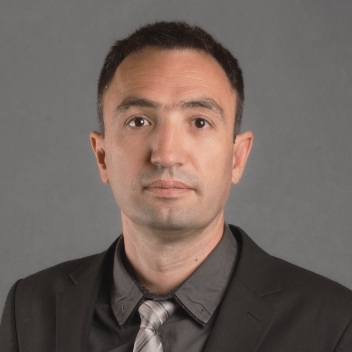
Jonatan Lerga
Full Professor of Electrical Engineering and Associate Dean for Education at the University of Rijeka, Croatia
Prof. Jonatan Lerga is Full Professor of Electrical Engineering and Associate Dean for Education at the University of Rijeka, Croatia. He received his PhD from the University of Zagreb in 2011. He founded and directs the University of Rijeka Center for Artificial Intelligence and Cybersecurity and heads the Information Processing Laboratory. Prof. Lerga has authored more than 110 scientific papers, including 30 Q1-ranked journal articles, and has led numerous EU Horizon, Digital Europe, and national research projects. His work has been cited over 1,100 times (Google Scholar). Honors include the 2022 Croatian State Science Award, the Croatian Academy of Sciences and Arts Award, and several regional and university prizes. He serves on editorial boards of international journals, reviews extensively, and is a member of UNESCO’s International Research Centre on AI and Croatia’s National Council for Digital Transformation. His research focuses on digital signal processing, artificial intelligence applications, coding, and cryptography.
The power of community














Interested in partnering with AI2Future?
Relevant info
Kraš Auditorium
Ravnice 48, Zagreb
28-29 October
9:00 - 17:00h


"AI2Future is conference made by community for community. Since 2017, we are going beyond the hype and aiming to cover practical, real-world use cases interesting for engineers and researchers as well as practitioners from other industries. This year’s lineup of speakers will be the strongest so far, so make sure not to miss it!"
- Marko Velić (Software Engineer @ Google)

"10 years of the AI2Future conference have made our AI/ML community stronger and relevant on the EU stage. AI2Future is the place to learn, meet AI/ML peers from Croatian and regional companies, and from the whole CroAI community."
- Davor Aničić (CEO and Co-founder @ Velebit AI, Board Member @ CroAI)

"AI2Future is a great place to learn and connect with experts in the field. The conference provides just right mix of deep technical talks, visionary keynotes, and honest discussions about trends and challenges. Can wait for the next one!"
- Domagoj Kovač (Business Development Manager @ Sedmi odjel)
Behind the scenes

Davor Aničić
CEO and Co-founder @ Velebit AI, Board Member @ CroAI
Seasoned business leader with a product management background leading a tiny, efficient and very experienced team of Velebit AI that implements B2B solutions and delivers AI services for online marketplaces, publishing, e-commerce, gaming, biotech and many other industries. Serial entrepreneur starting in the early internet days but also spent five years in academia and 15 years in the corporate environment in various roles across industries like telecommunications, online publishing, and technology transfer. Driven to understand how AI will interact with humans and change our livelihoods in the years to come.

Davor Runje
Head of OSS Engineering @ AG2
Davor is the Co-founder/Chief Scientist at AIRT, an AI Technology company that helps finance companies to use big data techniques on (pre)process transactional data and dramatically improve accuracy of all predictive models created and used by the internal data science team.
Before co-founding DRAP in 2008, he co-founded PlayMedia Systems in 1997 and launched AMP MP3 technology on the global market, and helped launch BabyWatch (now called Bellabeat) in 2013, a digital health wearable company. He also teaches machine and deep learning at the HUB385 Innovation center.
As a PhD intern working with Yuri Gurevich at Microsoft Research, he worked on applications of the interactive ASM thesis on multiprocessor/multicore programing. He designed, implemented and transferred technology to a product group of a system for execution of structured concurrency, later named the Task Parallel Library of .NET framework. Received the SSCLI and Phoenix 2005 award by Microsoft Research as one of the best 16 research projects in international competition.
Inventor and lead developer of several DRM based and DRM free systems for digital audio distribution based of AMP® MP3 decoding engine for clients including DMX Music, STMicroelectronics and Napster.

Marko Velić
Software Engineer @ Google
Marko is an Engineering Manager at Google. Previously he worked at Photomath, Meta (Facebook), Styria, LEGO (as consultant), University of Zagreb and has entrepreneurship experience. He won many awards including the ones from Microsoft and NVIDIA. Marko is also lecturer at Algebra University. He is interested in ML research and practical applications in real life scenarios.

Aleksandar Raić
Member of Management Board at Pontis Technology, Global VP of AI at Bridgewest Group
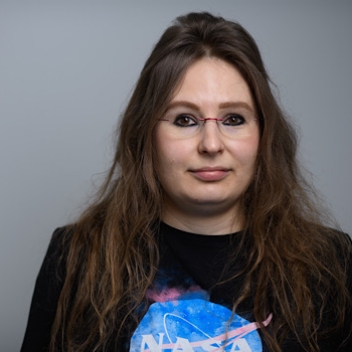
Valentina Zadrija
Technical Lead AI/ML at Yaak Technologies, Board Member @ CroAI

Matko Bošnjak
Senior Research Scientist @ Google DeepMind

Jan Šnajder
Full professor @ FER
With extensive experience in event strategy, execution, and ecosystem building, Eventa 01 is a trusted partner to a wide range of Tech, IT, Data & Analytics, and AI organizations and individuals.
Aiming to create forward-looking and productive environments, we build communities and make things happen through events, project collaborations, matchmaking, and business development.


CroAI-building a bold AI future through fostering community, collaboration, and innovation.
See you in October!
Blind Bird
160EUR+ VAT
*LIMITED NUMBER TO 15.05.
Early Bird
220EUR+ VAT
*FROM 15.05. TO 02.10.
Let’s Keep in Touch
Legal name: EVENTA nulajedan d.o.o.
VAT: 68383496496
MBS: 080962453
Director: Dinka Dumičić
EVENTA01 designs and delivers events that connect people, ideas, and opportunities across the tech ecosystem.


